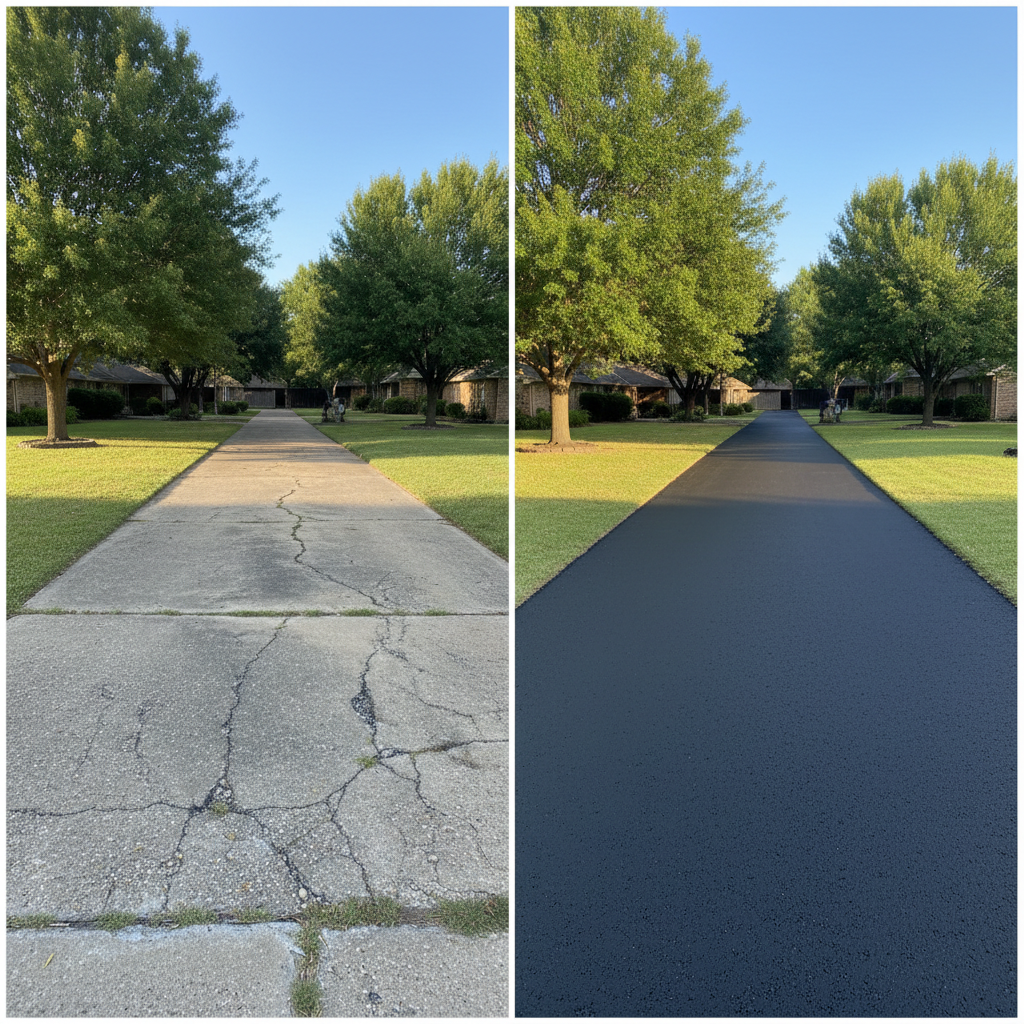
Are you looking at a cracked, worn-out driveway and wondering what material to put down next? If you live in Houston, Texas, you already know our local conditions do not play nice with pavement. Between the intense summer heat that bakes asphalt and the stubborn Beaumont clay that shifts every time it rains, picking the right paving material matters. Mighty Asphalt Inc gets asked all the time whether a homeowner should stick with flexible asphalt or switch over to poured concrete. We will break down how these two options actually stack up in the real world.
Upfront Costs and Installation
When it comes to your wallet, asphalt usually wins the initial price battle. Asphalt is quicker to lay down, and the raw materials are generally cheaper than concrete. A typical asphalt driveway can be installed and ready for traffic in 2 to 3 days. Concrete demands more intensive labor, extensive formwork, and a longer curing window. Homeowners pay more upfront for concrete because of the heavy-duty reinforcement needed to keep it from snapping under its own weight.
How They Handle Houston Soil and Weather
Here is where things get interesting, and where local geography in Houston has the final say. Houston's expansive clay soil swells when we get torrential downpours and shrinks into hard blocks during those brutal August droughts. Concrete is rigid. When the clay underneath moves, rigid concrete cracks. Once a concrete slab cracks, fixing it usually means tearing out whole sections. Asphalt, by contrast, is naturally flexible. Asphalt bends and moves slightly with the shifting ground rather than instantly snapping. However, asphalt has its own challenges with extreme heat combined with parked vehicle tires. On a scorching July afternoon in Spring or Katy, soft asphalt can scuff if you turn your steering wheel while sitting still.
Maintenance and Long-Term Care
Every driveway needs some attention over the years, but the maintenance routines look completely different. Asphalt requires a seal coat every 2 to 3 years to lock out moisture and protect the binder from the sun's UV rays. If you stay on top of sealing and minor crack filling, an asphalt surface handles our climate remarkably well. Concrete does not need sealants nearly as often, but when it stains from oil leaks or rust—which happens a lot in our humid environment—cleaning it is a chore. Plus, if a concrete slab heaves because of a tree root or soil movement, your repair options are limited and expensive.
Our Local Recommendation
If you want lower upfront costs, a surface that flexes with our unpredictable local ground movement, and quick repairs when minor wear shows up, asphalt is tough to beat. Mighty Asphalt Inc recommends asphalt for homeowners who want a durable, smooth-riding driveway without paying premium concrete prices. Just make sure your base is compacted right from the start, keep up with routine maintenance, and your driveway will serve you well for 15 to 20 years or more.