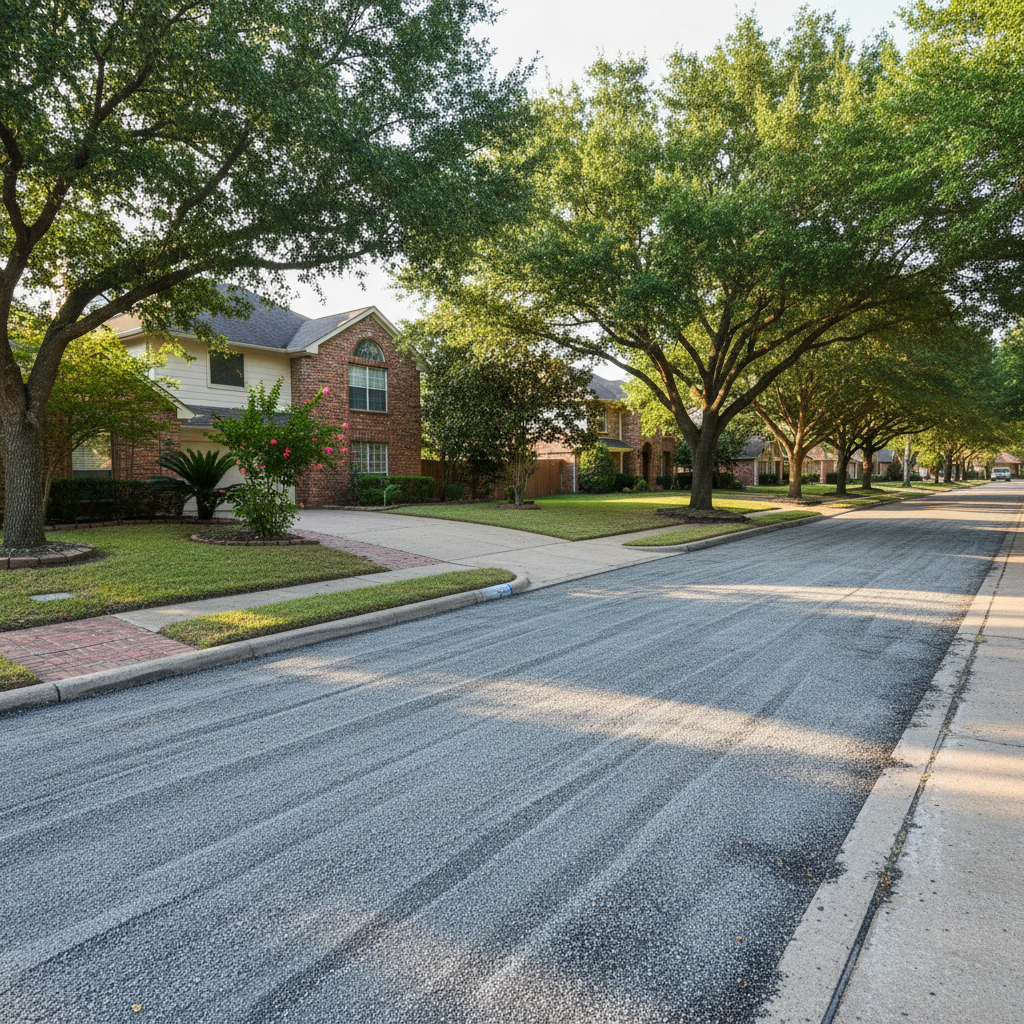
Ever look at your driveway and realize patching is not going to cut it anymore? When asphalt in Houston is rutted, holding standing water after a heavy Gulf Coast thunderstorm, or sitting too high against your garage threshold, Asphalt Milling is usually the smartest way to fix it. Instead of tearing out the whole foundation, a cold planer grinds away the top layer of damaged pavement to create a clean slate. Asphalt Milling maps out the process without getting caught off guard.
What the Timeline Looks Like
Most residential Asphalt Milling and resurfacing projects move fast compared to total concrete overhauls. For a standard driveway in neighborhoods like Spring or Katy, the physical work usually takes 2 to 3 days total. Day one typically covers the milling machine chewing up the top inch or two of old asphalt and hauling the debris away. Day two involves cleaning the surface, laying down a tack coat, and rolling out fresh hot mix asphalt. Weather can throw a wrench into things. If a sudden summer downpour rolls through, Mighty Asphalt Inc has to pause until the subgrade dries out properly.
Preparing Your Property
Homeowners need to do a little prep work before our crew shows up with heavy equipment. First off, clear all vehicles out of the driveway and off the street right in front of your house the night before. Turn off any automatic lawn sprinklers for at least 24 hours so the base stays dry. If you have pets or kids, keep them safely indoors because active job sites are loud and busy. You will not be able to drive on the new surface immediately, so plan to park on the street for a couple of days while the fresh asphalt cures in the Texas heat.
Questions to Ask Before Signing
Never sign a contract until you have pinned down the details. Mighty Asphalt Inc always tells homeowners to ask these exact questions before hiring any contractor:
- Are you hauling away the milled debris or leaving it behind?
- What specific depth are you planning to mill, and does it address our local expansive clay soil issues?
- Who handles utility markings before the heavy machinery starts grinding?
- Is a rolling compaction step included to stabilize the base layer?
- What does your warranty cover if surface cracks appear during the first season?
Getting clear answers upfront keeps everyone on the same page and ensures your new surface stands up to years of heavy use.